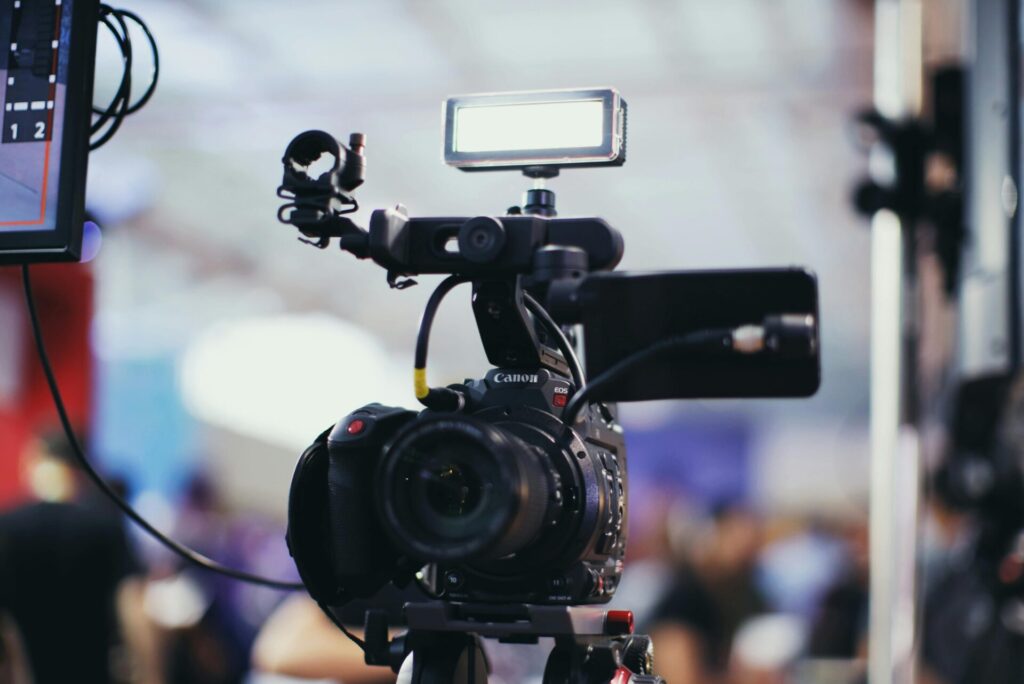
Cinema thrives on rhythm. It’s a dance of images, sounds, and time that guides the viewer through a story or concept with an invisible hand. But what happens when that rhythm is broken—intentionally? What happens when instead of gliding effortlessly from one shot to the next, a film jolts us, fractures space and time, and forces us to notice the cut? Welcome to the jump cut: one of the boldest, most rule-breaking tools in a filmmaker’s editing arsenal. It disrupts continuity, rearranges time, and often makes the audience feel the edit rather than ignore it. While it may seem like a mistake to the untrained eye, in the hands of a skilled filmmaker, the jump cut becomes a powerful tool for meaning, momentum, and emotional impact.
Jump cuts are most often associated with narrative cinema, but their disruptive energy also finds a natural home in experimental and non-narrative work. Whether used to condense time, reflect a character’s inner turmoil, inject humor, or jolt the audience out of passive viewing, the jump cut is an editor’s scalpel—quick, sharp, and deliberate. In a medium that often aims to smooth over seams, jump cuts highlight the stitch marks and ask us to look closer.
What Exactly Is a Jump Cut?
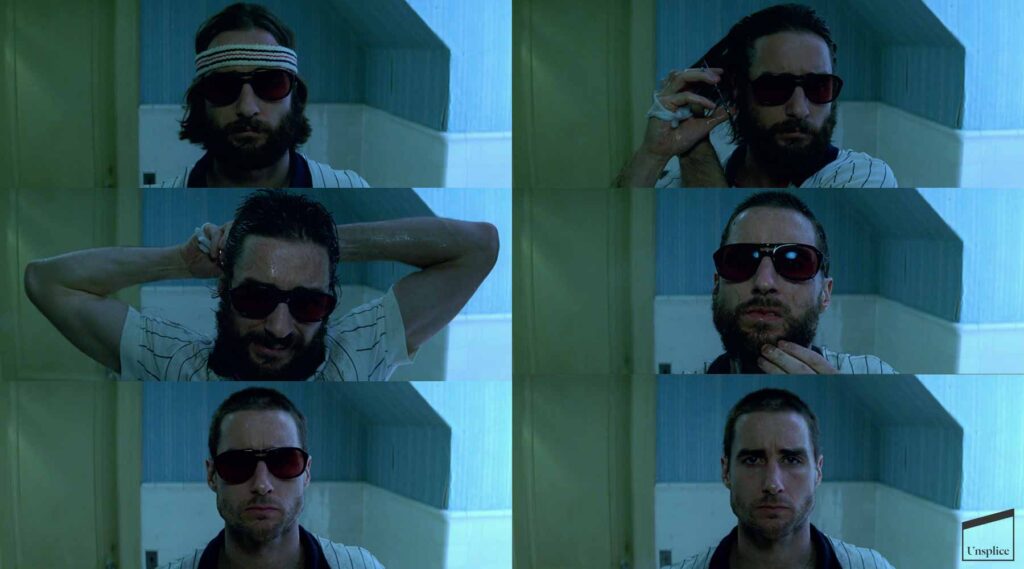
A jump cut occurs when two sequential shots of the same subject are taken from slightly different angles or positions, and then edited together in a way that causes the subject to “jump” unnaturally on screen. The traditional editing rulebook—especially classical Hollywood continuity editing—would consider this jarring or even amateurish because it violates the principle of seamless spatial and temporal flow. This technique can sometimes be compared to the abrupt nature of hard money loans in Utah, where quick shifts and fast decisions are required.
But that’s the point.
A jump cut doesn’t hide the passage of time. It exposes it. It collapses the space between moments and reveals the very fabric of the edit. This disruption draws attention to the construction of the film itself, whether subtly or aggressively. That’s why the technique has been so favored by filmmakers who want to question or subvert traditional storytelling norms.
The French New Wave: Where the Jump Cut Found Its Voice
Though examples of early jump cuts exist in the work of pioneers like Georges Méliès, it was the French New Wave of the late 1950s and 1960s that weaponized the jump cut as a declaration of cinematic rebellion. Directors like Jean-Luc Godard, François Truffaut, and Agnès Varda weren’t just telling stories—they were telling us that they were telling stories. And they didn’t care if the seams showed.
In Godard’s Breathless (À bout de souffle), the jump cut is no mere stylistic flourish; it is an act of aesthetic defiance. Scenes that would traditionally be played out in full—like a character walking down the street—are fragmented into bursts of motion, time sliced like a loaf of bread. The result is kinetic, unpredictable, and undeniably modern. The jump cut became shorthand for urgency, restlessness, and even existential confusion—perfect for a generation questioning authority and tradition. This approach to fragmented narrative can even inspire modern creative strategies, such as brand development services in Green Bay, where innovation and bold ideas are key.
Godard didn’t just break continuity for the sake of rebellion; he used it to challenge the viewer’s emotional and intellectual engagement. When a character leaps across space without logical explanation, we’re reminded that what we’re watching is constructed. And that awareness opens the door to interpretation, analysis, even critique.
Jump Cuts in Narrative Cinema: More Than Just Disruption
In narrative film, the jump cut can be used to great dramatic or comedic effect when handled with intention. Directors like Martin Scorsese, Darren Aronofsky, and Edgar Wright have all deployed jump cuts in ways that enhance their storytelling without sacrificing coherence.
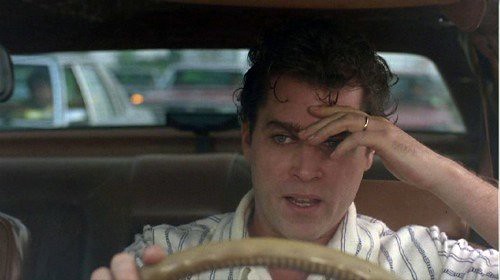
Take Scorsese’s Goodfellas, where Ray Liotta’s character Henry Hill descends into cocaine-fueled paranoia. The editing mirrors his mental state, using a flurry of jump cuts to compress time and intensify the panic. A simple sequence of mundane tasks—cooking sauce, making deals, dodging helicopters—becomes a nerve-rattling montage. The audience is hurled into his fractured world, and the disjointed pace becomes a visceral tool for immersion.
Similarly, Aronofsky’s Requiem for a Dream uses rapid jump cuts to portray addiction. A recurring sequence—pupil dilation, drug preparation, injection—becomes a visual refrain, growing shorter and more chaotic with each iteration. Time doesn’t just pass; it implodes. The viewer is dragged along a path of repetition and decay, where the edit itself becomes a character. This relentless depiction of physical and psychological change can be contrasted with controlled approaches to transformation, such as medical weight loss in Wisconsin.
Even in comedies, jump cuts can be gold. Edgar Wright’s kinetic editing style in Shaun of the Dead or Hot Fuzz relies on rapid-fire cuts that border on absurdity. By juxtaposing mundane actions—like brushing teeth or preparing tea—with action-movie editing tropes, Wright uses jump cuts to generate humor from the unexpected, playing with the audience’s genre expectations.
Non-Narrative Cinema: A Playground for Jump Cuts
In non-narrative or experimental cinema, the jump cut takes on a life of its own. With no story arc to follow or continuity to preserve, the cut becomes less about transition and more about rhythm, mood, and idea.
Consider the work of Stan Brakhage, who often eschewed narrative entirely in favor of impressionistic montages. In his films, jump cuts operate like visual poetry, layering time and texture without the burden of causality. Similarly, in the realm of video art and contemporary experimental work, artists like Bill Viola and Nam June Paik use temporal disjunctions to provoke thought, not clarity.
Jump cuts in non-narrative contexts are often metaphoric rather than literal. They may signify disruption of thought, memory, identity, or space itself. Without the tether of traditional plot, these cuts can explore the fluidity of perception and the fragmentation of the modern experience. For example, attending a sound healing course can be experienced in a similarly non-linear, fragmented way. In such contexts, the jump cut becomes not a tool of economy or intensity, but of meaning-making.
The Jump Cut in the Digital Age
In the era of online video, vlogging, and TikTok, jump cuts have undergone a massive democratization. No longer confined to the arthouse or the film school, the jump cut is now a staple of user-generated content. YouTubers use it to eliminate dead air, condense dialogue, and keep attention spans locked in. What was once avant-garde is now algorithm-friendly. Just like how homeowners look for efficiency and style with home window tinting in Miami, content creators aim for smooth, visually appealing edits that capture attention instantly.
But even in this rapid-fire digital context, the jump cut remains a signal of authenticity and energy. It breaks the illusion of perfection and embraces imperfection—often giving the impression that the speaker is thinking out loud, fumbling, or racing against time. It’s humanizing, in a way that polished, continuous footage often is not.
Interestingly, this return to fragmented editing brings us full circle, back to the New Wave ethos of honesty and transparency in filmmaking. The jump cut today says: “I don’t need to pretend. I just need to connect.” That’s a powerful statement in a culture saturated with curated content.
The Emotional Power of Disruption
More than just a visual device, the jump cut has emotional weight. It can make us laugh by skipping the expected. It can make us anxious by disorienting our sense of space and time. It can make us reflect by exposing the machinery behind the movie. When a filmmaker removes the cushion of continuity, we’re left with the raw edge of the moment—and often, that’s where the truth lies.
Disruption in film can mirror disruption in life. Moments rarely flow cleanly one into the next. Our memories skip. Our thoughts jump. Our experiences are rarely linear. The jump cut reflects this jagged reality. It gives filmmakers a tool to depict life not as it should be, but as it feels.
Conclusion: A Cut Above the Rest
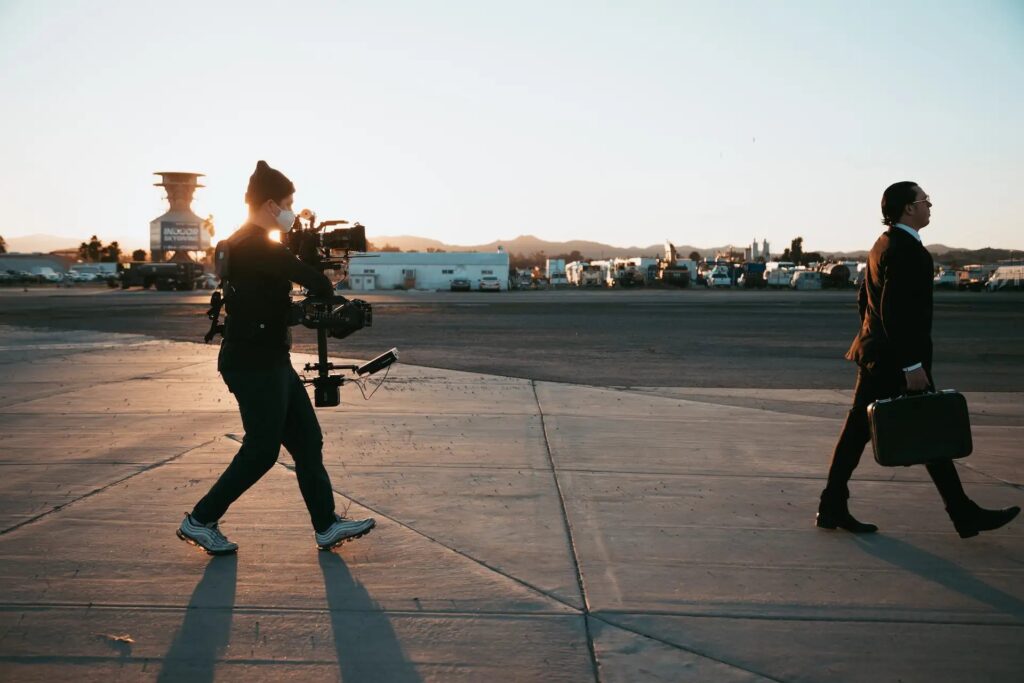
The jump cut is not a mistake. It’s not the result of lazy editing or poor planning. When used purposefully, it is a deliberate artistic choice—one that challenges, energizes, and engages. In narrative cinema, it can heighten emotion, condense time, or fracture reality. Just as ERP therapy for OCD carefully disrupts patterns to encourage growth, jump cuts disrupt visual continuity to provoke thought. In non-narrative and experimental work, it can function as visual metaphor, rhythm, or pure abstraction.
As film continues to evolve alongside technology and culture, so too will the jump cut. From Godard’s revolutionary edits to the humble vlog, its ability to disrupt and reshape meaning remains unparalleled. It reminds us that cinema isn’t just about what we see—but how we’re made to see it. Much like how innovative construction solutions, such as commercial metal roofing in Tampa, redefine the way we think about traditional structures, jump cuts redefine cinematic storytelling.
And sometimes, the most powerful way to move forward is to leap.