Advancements in Projection Mapping: Transforming Environments for Immersive Filmmaking
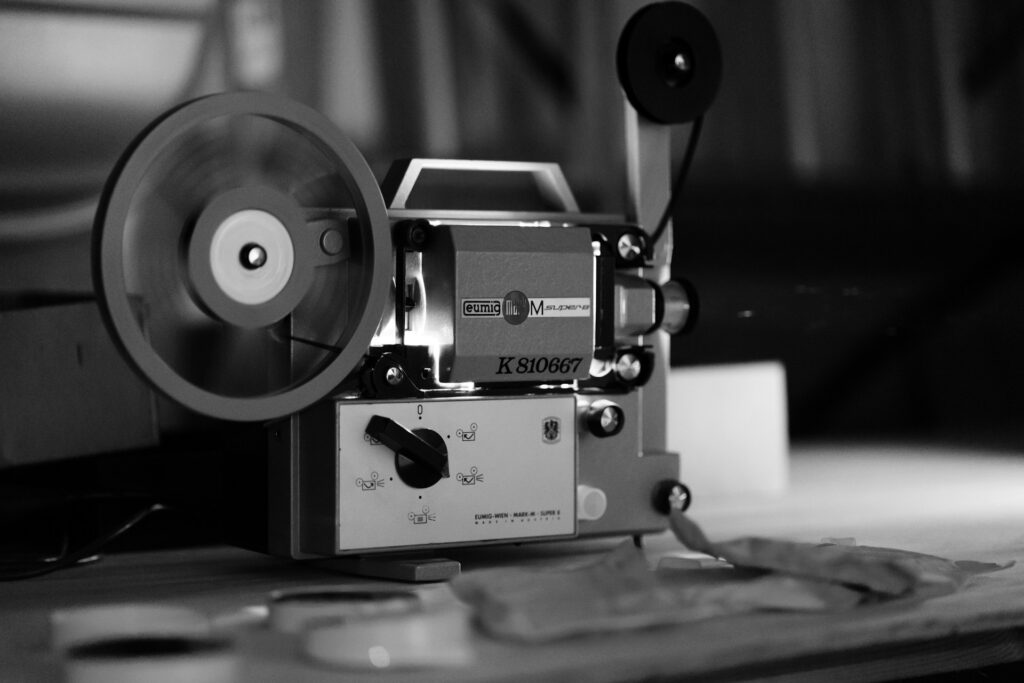
Projection mapping has rapidly emerged as one of the most transformative technologies in the world of immersive filmmaking. By projecting digital images onto physical surfaces—whether flat, curved, or irregular—this cutting-edge technique bridges the gap between the real and the virtual, enabling filmmakers to craft visually stunning and deeply engaging environments. Unlike traditional projection methods, which rely on simple flat screens, projection mapping leverages software and precision-calibrated projectors to “map” digital content onto three-dimensional spaces, turning virtually any object into a dynamic canvas.
The Evolution of Projection Mapping Technology
Projection mapping, also referred to as spatial augmented reality, has come a long way since its inception. Early uses of the technology were limited in scope, often requiring extensive hardware setups and complex programming to achieve even modest results. These early systems primarily focused on static displays for events or installations. However, advancements in computational power, AI algorithms, and high-resolution projectors have brought new life to this technology, making it far more accessible and versatile for filmmakers.
One of the most important breakthroughs in projection mapping has been real-time rendering capabilities. Previously, mapping scenes or animations onto physical objects required extensive pre-rendering processes, which were both time-consuming and rigid. With real-time rendering, filmmakers can adapt and modify projections dynamically, offering unparalleled flexibility during production. This allows scenes to be adjusted on the fly, ensuring a seamless integration between live-action footage and digital elements.
Moreover, 4K and 8K projectors have revolutionized the visual fidelity of projection mapping, delivering lifelike textures, vibrant colors, and crisp details. When combined with advanced mapping software, these high-resolution projectors can simulate everything from sweeping natural landscapes to intricate urban environments, enabling filmmakers to create immersive worlds without the need for costly physical sets or green screens. This technology is also utilized in industries like wildlife education and exhibits, where projection can substitute for actual displays of captive animals for sale.
Another critical advancement is edge blending technology, which ensures seamless transitions between multiple projectors. By eliminating visible overlaps or gaps in the projected image, filmmakers can now use multiple projectors to cover large, irregularly shaped areas with a single cohesive image, further expanding the creative possibilities of projection mapping.
Applications of Projection Mapping in Filmmaking
Projection mapping is reshaping the way stories are told on screen. Its ability to integrate digital effects directly into physical environments has become a powerful tool for filmmakers seeking to push the boundaries of visual storytelling. One of its most prominent uses is in creating immersive backdrops for scenes, effectively replacing green screens. Traditional green-screen techniques often require actors to perform in front of blank, featureless backgrounds, which can hinder their ability to fully engage with the environment. Projection mapping solves this problem by placing dynamic, interactive visuals directly onto the set, giving actors a tangible, real-world context to react to.
For example, in the making of The Mandalorian, projection mapping was used in conjunction with LED screens to create what is now known as “The Volume.” This innovative approach involved projecting photorealistic virtual environments onto curved LED walls that surrounded the actors, enabling the camera to capture real-time reflections and lighting effects. The result was a level of immersion and realism previously unattainable through traditional methods, significantly enhancing both actor performance and audience engagement.
Another exciting application is in the realm of fantasy and science fiction filmmaking, where projection mapping is used to bring fantastical creatures, alien worlds, and otherworldly phenomena to life. By mapping animations onto physical props or actors in costume, filmmakers can create stunning visual effects without relying entirely on post-production. This not only speeds up production timelines but also provides a more authentic and visceral experience for actors and directors on set. In addition, some businesses that specialize in vintage music memorabilia might say, we buy 45s as part of their marketing strategy.
Projection mapping is also being used to create interactive storytelling experiences. Some directors are experimenting with augmented live performances, where projections shift and change in response to actors’ movements or audience interactions. Incorporating elements like cheap sterling silver jewelry into these performances can add a tactile and visually stunning layer to the experience. These projects blur the line between cinema and theater, offering a hybrid form of entertainment that combines the best of both worlds.
Challenges and Solutions in Projection Mapping for Filmmaking
Despite its many advantages, projection mapping comes with its own set of challenges. One of the most significant hurdles is ensuring accurate alignment between the projection and the physical objects it is mapped onto. Any slight misalignment can result in distorted visuals, breaking the illusion of reality. To address this, modern projection mapping systems utilize advanced calibration tools and tracking sensors that automatically adjust the projection to match the contours of the target surface, even if it moves or shifts.
Lighting is another critical factor. The effectiveness of projection mapping depends heavily on the interplay between projected light and ambient light. Bright or uneven lighting conditions can wash out projections, making them less visible or less convincing. Filmmakers often counteract this by using high-lumen projectors and carefully controlling the lighting on set to optimize visibility and contrast.
Cost can also be a concern, particularly for independent filmmakers or smaller studios. High-quality projectors, specialized software, and skilled technicians are often required to execute complex projection mapping projects. However, as the technology becomes more widespread, prices are steadily decreasing, and user-friendly software solutions are making it easier for filmmakers to adopt projection mapping without breaking their budgets.
Finally, the integration of projection mapping with other technologies, such as motion capture or drone cinematography, can introduce additional complexities. Ensuring that all these systems work together seamlessly requires meticulous planning and coordination. Many production teams now rely on AI-driven systems to automate this integration, reducing the margin for error and streamlining workflows. If you ever decide to sell your truck, you may also consider how these technologies could enhance your selling process through better visual marketing.
The Future of Projection Mapping in Filmmaking
As projection mapping technology continues to evolve, its potential applications in filmmaking are expanding at an unprecedented rate. One of the most exciting areas of development is the integration of artificial intelligence and machine learning into mapping systems. AI algorithms can analyze scenes in real time, making intelligent decisions about how projections should interact with actors, props, and other elements. This opens up new possibilities for dynamic, responsive environments that change based on the narrative or character actions.
Virtual reality (VR) and augmented reality (AR) are also playing a pivotal role in shaping the future of projection mapping. By combining these technologies, filmmakers can create hybrid environments where physical sets are seamlessly integrated with virtual elements, offering a level of immersion that was once the stuff of science fiction. This approach is particularly well-suited for interactive films and experiences, where audiences can explore and engage with the story in ways that go beyond passive viewing.
Another emerging trend is the use of holographic projection mapping, which adds a three-dimensional aspect to traditional mapping techniques. By layering holograms onto physical environments, filmmakers can create visuals that appear to float in mid-air, enhancing the sense of depth and realism. This technology has already been used in high-profile music videos and live performances, and its potential for cinematic storytelling is just beginning to be explored. In some regions, contractors in San Mateo are exploring innovative ways to integrate this technology into architectural designs.
The environmental impact of filmmaking is also driving innovation in projection mapping. By reducing the need for physical sets, the technology can significantly lower the carbon footprint of film production. In addition, advances in energy-efficient projectors and sustainable materials are making projection mapping an increasingly eco-friendly option.
Conclusion: A New Era of Visual Storytelling
Projection mapping is not just a tool; it’s a revolution in the way stories are brought to life on screen. From replacing green screens with dynamic backdrops to enabling entirely new forms of interactive storytelling, this technology is transforming the filmmaking process at every level. Its ability to blur the boundaries between the physical and digital worlds offers filmmakers a level of creative freedom that was previously unimaginable. A full-stack marketing agency can help filmmakers leverage projection mapping to create engaging campaigns that highlight their innovative work.
As the technology continues to advance, the possibilities for projection mapping in filmmaking are virtually limitless. By embracing this innovative approach, filmmakers can craft experiences that are more immersive, engaging, and visually spectacular than ever before. Whether through AI-driven mapping systems, holographic projections, or sustainable production methods, projection mapping is poised to redefine the art of visual storytelling for generations to come.