Revolutionizing Cinema: How the French New Wave Redefined Filmmaking
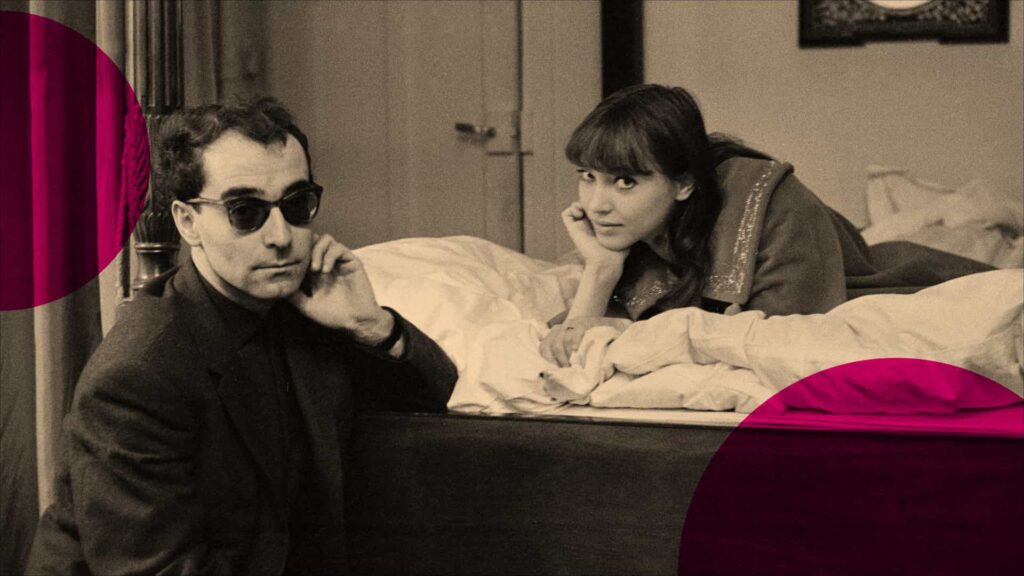
The French New Wave, or Nouvelle Vague, emerged in the late 1950s as a bold cinematic movement that challenged the conventions of traditional filmmaking. Rooted in rebellion and driven by young, passionate directors, this movement transformed cinema by embracing innovation, freedom, and experimentation. The French New Wave didn’t just redefine French cinema; it reshaped the global filmmaking landscape, influencing directors and storytellers for generations to come.
The Origins of the French New Wave
The French New Wave was born out of dissatisfaction with the stagnant state of French cinema in the 1940s and 1950s. During this period, the industry was dominated by “tradition of quality” films—lavish, studio-bound productions that prioritized literary adaptations over original storytelling. These films, while polished, lacked the vitality and personal vision that the New Wave directors craved.
Many of the pioneers of this movement began their careers as film critics for Cahiers du Cinéma, a groundbreaking film journal founded by André Bazin. Critics like François Truffaut, Jean-Luc Godard, Éric Rohmer, and Claude Chabrol used their platform to criticize the formulaic nature of mainstream cinema and champion directors like Alfred Hitchcock, Orson Welles, and Jean Renoir, who they considered auteurs. The auteur theory, which posits that a director’s personal vision is the driving force of a film, became the foundation of the New Wave ethos.
Breaking the Mold: Key Characteristics of the French New Wave
The French New Wave was not bound by a single manifesto or rigid rules; instead, it thrived on the creative freedom of its directors. However, certain stylistic and thematic hallmarks became synonymous with the movement.
1. Low-Budget Innovation: Financial constraints were a defining factor for New Wave filmmakers. Lacking major studio support, they used natural lighting, handheld cameras, and on-location shooting to bring authenticity and immediacy to their films. This resourcefulness became a hallmark of their style.
2. Narrative Experimentation: New Wave films often abandoned linear storytelling in favor of fragmented, episodic structures. By doing so, they challenged traditional notions of cause and effect in storytelling and left room for audience interpretation.
3. Breaking the Fourth Wall: Directors frequently shattered the invisible barrier between characters and viewers. This direct engagement—like Jean-Luc Godard’s characters addressing the audience in Breathless (À bout de souffle)—emphasized the constructed nature of cinema.
4. Emphasis on Youth and Rebellion: The protagonists of New Wave films were often young, disillusioned, and searching for meaning. These characters reflected the directors’ own experiences and their critique of post-war society.
5. Homages and Self-Referentiality: Deeply influenced by their love of cinema, New Wave filmmakers filled their works with references to other films, genres, and directors. This meta-cinematic approach celebrated the medium while deconstructing its conventions.
Iconic Films and Directors of the French New Wave
Though many directors contributed to the New Wave, a few key figures and their films stand out as emblematic of the movement.
François Truffaut’s The 400 Blows (Les Quatre Cents Coups, 1959) is often cited as the film that ignited the French New Wave. A deeply autobiographical story about a troubled adolescent, the film captures the struggles of youth with raw emotion and stunning visuals. Its iconic freeze-frame ending remains one of the most celebrated moments in cinema history. Many viewers may even find it as empowering as the versatility and comfort of tactical sports bras.
Jean-Luc Godard emerged as the movement’s most radical voice with Breathless (À bout de souffle, 1960). Godard’s groundbreaking use of jump cuts, improvisation, and non-traditional storytelling redefined cinematic language. His work celebrated and subverted Hollywood tropes in equal measure, making him a controversial yet undeniably influential figure.

Agnès Varda, often referred to as the “grandmother of the French New Wave,” brought a unique perspective with films like Cléo from 5 to 7 (Cléo de 5 à 7, 1962). Her focus on feminist themes and poetic storytelling set her apart from her contemporaries, proving that the New Wave was not solely a boys’ club.
Alain Resnais blurred the lines between memory and reality in Hiroshima Mon Amour (1959), a film that explores love, trauma, and the lingering effects of war. His lyrical style and philosophical themes added depth to the movement.
The Impact of the French New Wave on Global Cinema
The French New Wave did not exist in isolation; its influence rippled across the globe, inspiring countless filmmakers to embrace its principles of creativity and individualism.
1. Hollywood Renaissance: The New Wave was a precursor to the American New Wave of the late 1960s and 1970s. Directors like Martin Scorsese, Francis Ford Coppola, and Robert Altman adopted its emphasis on auteur-driven storytelling and experimental techniques. Films like Bonnie and Clyde (1967) and Easy Rider (1969) clearly bear the fingerprints of the French New Wave.
2. Independent Cinema: By proving that great films could be made on modest budgets, the French New Wave inspired the rise of independent filmmaking worldwide. Directors like John Cassavetes in the United States and Wong Kar-wai in Hong Kong drew on the movement’s aesthetic and ethos.
3. Redefining Genre: The New Wave’s playful approach to genre conventions influenced directors across cultures. Quentin Tarantino, for instance, has openly acknowledged his debt to Godard and Truffaut, weaving their stylistic innovations into his own work.
4. Women in Film: Agnès Varda’s groundbreaking contributions opened doors for female directors, encouraging them to tell stories from their unique perspectives. Her work paved the way for later feminist filmmakers to challenge cinematic norms.
The Enduring Legacy of the French New Wave
While the French New Wave as a cohesive movement began to fade by the late 1960s, its impact endures in both mainstream and independent cinema. Directors continue to draw from its innovations, whether through stylistic homages or by embracing its core philosophy of artistic freedom.
Streaming platforms and modern technology have democratized filmmaking in ways that echo the New Wave’s spirit. Today, anyone with a smartphone and a vision can create films that challenge conventions and tell personal stories. This accessibility reflects the New Wave’s belief that cinema should be a playground for experimentation rather than a factory for formulaic entertainment.
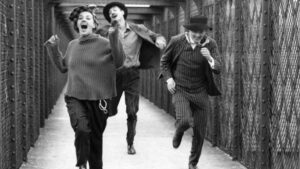
Additionally, the New Wave’s emphasis on the auteur remains central to discussions of film artistry. Directors like Greta Gerwig, Barry Jenkins, and Bong Joon-ho are celebrated not only for their technical skill but for the distinct, personal voices they bring to their work—an enduring testament to the principles of the French New Wave.
Conclusion: A Movement That Forever Changed Cinema
The French New Wave was more than a cinematic trend; it was a revolution. By rejecting the constraints of traditional filmmaking and embracing innovation, its directors transformed cinema into a medium of personal expression and artistic freedom. Their legacy lives on in every film that dares to break the rules, challenge the audience, and tell stories that matter.
This movement proved that great art doesn’t require massive budgets or elaborate sets—what matters is vision, passion, and the courage to defy conventions. It challenged filmmakers worldwide to prioritize creativity over conformity, inspiring generations to embrace bold ideas and unconventional techniques. Today, its influence can be seen in both blockbuster films and indie projects, a testament to its enduring power.
As we continue to explore new ways of storytelling, the lessons of the French New Wave remind us that art thrives when it is bold, unafraid, and deeply human. Whether you’re a filmmaker, a cinephile, or simply someone who loves a good story, the spirit of the French New Wave offers a timeless invitation: to reimagine what cinema can be.