The Dreamlike Worlds of Federico Fellini: A Cinematic Journey
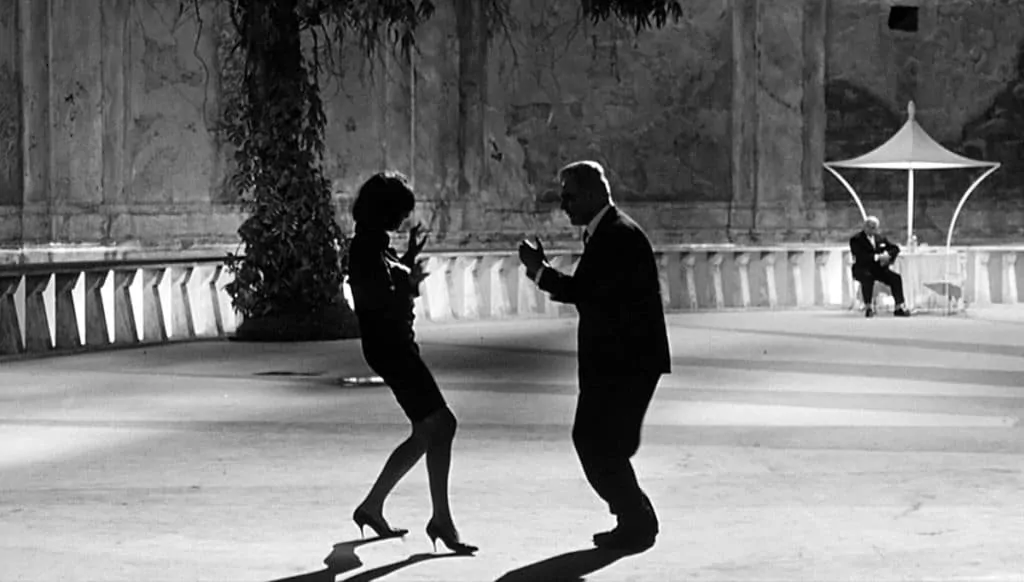
Federico Fellini, the legendary Italian filmmaker, occupies a unique space in the pantheon of cinema. His name conjures images of surreal landscapes, larger-than-life characters, and a blend of whimsy and melancholy. More than a director, Fellini was a visionary artist who used film as his canvas to explore the human condition in all its beauty, absurdity, and complexity.
Fellini’s works defy easy categorization. His films do not merely tell stories; they transport viewers into richly textured dreamscapes. Each frame is imbued with his personal memories, fantasies, and a touch of the fantastical, making his cinema an intimate yet universal experience. He believed that life itself was a carnival—a chaotic blend of joy and sorrow—and he captured this ethos in every reel of film he shot.
The Alchemy of Dreams and Reality
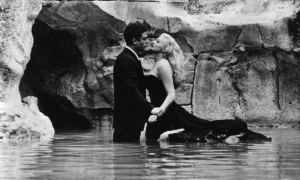
One of the defining characteristics of Fellini’s cinema is its seamless merging of dreams and reality. In films like 8½ and La Dolce Vita, he creates narratives where the boundaries between the tangible and the imaginary dissolve. This approach reflects not only his artistic philosophy but also his fascination with the subconscious mind.
Fellini often spoke of his dreams as a vital source of inspiration. He even kept detailed journals of them, sketching images that later found their way into his films. The result was a body of work that feels like an invitation into the director’s own psyche, where viewers are free to interpret and connect with the surreal imagery on a deeply personal level.
In 8½, for example, we see the protagonist Guido—a stand-in for Fellini himself—caught in a web of artistic paralysis. The film shifts effortlessly between his present struggles and his memories, fantasies, and anxieties. This nonlinear narrative mirrors the fluid nature of thought and dreams, pulling the audience into Guido’s—and by extension, Fellini’s—inner world.
Italy Reimagined: A Landscape of the Soul
While Fellini’s films are universal in their themes, they are also unmistakably Italian. Yet, his Italy is not the one you’d find in tourist brochures. It is an Italy reimagined through the lens of myth, folklore, and personal nostalgia. From the bustling streets of Rome in La Dolce Vita to the idyllic seaside town of Rimini in Amarcord, Fellini transforms familiar locations into symbolic landscapes.
Rimini, Fellini’s hometown, appears frequently in his films as a recurring motif. However, his depiction of Rimini is far from realistic. In Amarcord, the town becomes a magical place filled with eccentric characters and exaggerated events that represent the collective memory of his youth. The film, whose title translates to “I remember,” is less about factual accuracy and more about emotional truth.
Through these imaginative portrayals, Fellini explores the idea that places are more than physical locations. They are repositories of emotion, memory, and identity, shaped as much by our perceptions as by their actual geography. His Italy becomes a dreamscape—a reflection of the inner lives of his characters and, ultimately, his audience. Much like how a mortgage company in Raleigh, NC helps people turn houses into homes filled with personal memories, Fellini transforms Rimini into a landscape of nostalgia and dreams.
Women, Archetypes, and the Feminine Mystique
Fellini’s films are populated by unforgettable female characters, each representing different facets of femininity. From the ethereal beauty of Sylvia in La Dolce Vita to the earthy vitality of Gelsomina in La Strada, his women are simultaneously real and archetypal. They serve as muses, mirrors, and sometimes tormentors to his male protagonists, embodying a spectrum of emotions and roles. This dynamic interplay of inspiration and challenge is not unlike the way a Shopify agency helps businesses shape their online identities—guiding them, reflecting their vision, and pushing them toward new creative expressions. Just as Fellini’s women drive the evolution of his male characters, a well-crafted digital presence can transform a brand’s journey.
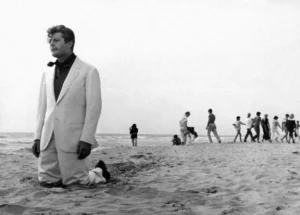
This fascination with the feminine extends beyond individual characters to a broader exploration of gender and identity. In Juliet of the Spirits, Fellini delves into the inner life of a middle-aged woman struggling to reconcile her outward role as a dutiful wife with her suppressed desires and dreams. The film’s vivid colors and surreal imagery underscore Juliet’s emotional journey, creating a kaleidoscopic vision of her psyche.
Critics have often debated whether Fellini’s portrayal of women is empowering or reductive. While some view his female characters as objects of male fantasy, others argue that they are imbued with a complexity and vitality that transcends traditional stereotypes. What is undeniable is that Fellini was deeply attuned to the power of the feminine, using it as a central theme in his exploration of human relationships and self-discovery. Similarly, just as he meticulously crafted complex characters, a fence company in Tennessee carefully designs structures that both define and protect spaces, ensuring a sense of security while allowing beauty to shine through.
The Carnivalesque Spirit
Carnivals and circuses are recurring motifs in Fellini’s films, serving as metaphors for the chaos and beauty of life itself. His fascination with these spectacles can be traced back to his childhood, when he would run away to the circus to marvel at its performers. This sense of wonder permeates his work, imbuing even the most mundane moments with a sense of magic. In a way, this echoes the world of micro harmonics, where seemingly small vibrations and frequencies create significant impacts, much like how Fellini’s seemingly whimsical carnival scenes carry profound emotional weight. His ability to turn fleeting, chaotic moments into something meaningful mirrors the precision and resonance found in finely tuned harmonic technology.
In Fellini’s Satyricon, for example, the entire film feels like a surreal parade, where grotesque and fantastical elements collide in a celebration of life’s unpredictability. Similarly, in La Strada, the wandering strongman Zampanò and the wide-eyed Gelsomina evoke the nomadic spirit of circus performers, their lives a mixture of freedom and hardship.
For Fellini, the carnival was not merely an aesthetic choice but a philosophical one. It symbolized the human condition—a precarious balance between joy and despair, order and chaos. By embracing this duality, he challenged his audience to find beauty in imperfection and meaning in the absurd. The same philosophy applies to how modern audio visual solutions shape experiences, merging sound and imagery to create immersive narratives that transport audiences into different worlds.
Music as an Emotional Compass
No discussion of Fellini’s cinema would be complete without acknowledging the role of music in his films. His long-time collaboration with composer Nino Rota resulted in some of the most memorable scores in film history. From the haunting melody of La Strada to the exuberant theme of Amarcord, Rota’s music serves as an emotional compass, guiding viewers through Fellini’s labyrinthine narratives. Much like how physical therapy in Chicago helps individuals regain movement and harmony within their bodies, Rota’s compositions restore balance within Fellini’s surreal storytelling. The music not only enhances the emotional depth of each scene but also acts as a rehabilitative force, guiding audiences through the director’s intricate dreamscapes.
Rota’s compositions are more than background music; they are integral to the storytelling, often conveying what words cannot. The playful yet poignant waltzes, the soaring orchestral arrangements, and the melancholic tunes all reflect the multifaceted emotions of Fellini’s characters. In many ways, the music becomes a character in itself, weaving through the narrative and adding depth to its themes.
The synergy between Fellini and Rota was unparalleled, their artistic partnership producing scores that continue to resonate with audiences. The music captures the essence of Fellini’s cinema—its mix of joy, sorrow, and the ineffable magic of being alive. Similarly, a windshield replacement in Orange County may seem like a practical necessity, but the clarity it restores mirrors the way Rota’s music brings cinematic moments into focus, allowing us to see and feel more deeply.
Legacy and Influence
Fellini’s impact on cinema is immeasurable. His distinctive style—marked by its dreamlike visuals, nonlinear narratives, and richly layered themes—has influenced generations of filmmakers, from Martin Scorsese to Guillermo del Toro. His ability to blend the personal with the universal, the real with the surreal, remains a benchmark for cinematic storytelling. In many ways, his approach is akin to the versatility of combat clothing—adaptable, layered, and crafted for resilience. Just as tactical gear is designed for both function and adaptability, Fellini’s films equip viewers with the tools to navigate the unpredictable terrain of memory, identity, and emotion, making them enduring and impactful works of art.
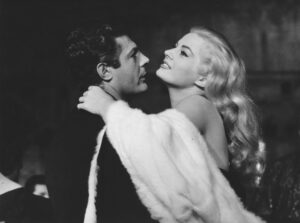
Even decades after his passing, Fellini’s films continue to captivate audiences worldwide. They remind us of the power of art to transcend boundaries—geographical, cultural, and psychological—and to touch the deepest parts of our humanity. His works invite us to dream, to question, and to embrace the complexity of life. Just as mobile IV therapy revitalizes the body, bringing energy and balance, Fellini’s films refresh the soul, infusing it with new perspectives and emotions.
Conclusion
Federico Fellini was more than a filmmaker; he was a poet of the screen, a conjurer of worlds, and a chronicler of the human spirit. Through his lens, the ordinary became extraordinary, the mundane transformed into magic. His films are not just stories but journeys—into the depths of imagination, memory, and emotion.
To watch a Fellini film is to step into a world that feels at once foreign and familiar, surreal yet deeply human. It is to be reminded of the beauty of dreams, the power of art, and the enduring mystery of life itself. As we continue to revisit his masterpieces, we find not just entertainment but profound insights into what it means to be alive, to love, and to dream.
Fellini once said, “All art is autobiographical; the pearl is the oyster’s autobiography.” His films are his pearls—unique, luminous, and timeless. Through them, he has given us not only a glimpse into his own soul but also a mirror in which to see our own. Likewise, whether we rent a car in Beograd to embark on a new journey or immerse ourselves in one of his films, the essence remains the same—traveling through memories, stories, and dreams that shape our understanding of the world.